Skilled Migration
Skilled migration starts with a clear, well-documented picture of your career
Skilled migration pathways look at a person's education, work history, occupation and language ability against requirements that each destination and programme sets for itself — and changes over time. Wobridge helps you organise that profile, find the gaps early and work out exactly what needs to be confirmed at the official source, so that decisions about a pathway rest on your real record rather than on assumptions.
- Profile review
- Qualification mapping
- Career documentation
- Application readiness

Destination country
Choose where you want to go
See job postings and programmes by country. Each destination has its own rules, so Wobridge prepares your file to the requirements of the country you choose.
 See opportunities
Canada
Hiring now See opportunities
Germany
Hiring now See opportunities
Romania
Hiring now See opportunities
Poland
Hiring now See opportunities
Australia
 See opportunities
United States
 See opportunities
United Kingdom
 See opportunities
New Zealand
 See opportunities
Cyprus
 See opportunities
Greece
 See opportunities
Malta
 See opportunities
Other countries
Overview
What skilled migration involves
A skilled migration pathway connects two things: the characteristics of your professional profile, and the criteria a destination or programme uses to decide who it is looking for. Those criteria can involve qualifications, work experience, occupation, language ability and more, and they are defined by each programme — not by a general rule that applies everywhere.
That is why preparation matters more here than almost anywhere else. Before anyone can say whether a pathway may be relevant to you, your own record needs to be complete, consistent and understood: which qualifications you hold and how they are documented, what you have actually done in each role, how your career fits together over time.
Wobridge works at that preparation stage. We help you assemble and structure your profile, see where information is missing or unclear, and prepare the right questions for the official sources and, where needed, for a licensed migration professional.
How Wobridge helps
- Organise your qualifications, training and professional records
- Structure your employment history into one consistent chronology
- Review how role descriptions line up with supporting records
- Identify gaps and inconsistencies before they become problems
- Prepare questions to verify against official sources
- Coordinate with licensed professionals where regulated advice is needed
What a profile review is not
- Wobridge does not guarantee eligibility, an invitation or any outcome.
- A profile that appears relevant to a pathway is not an official eligibility decision — only the responsible authority makes that decision.
- Requirements differ between destinations and programmes, and they change. Current rules must be confirmed against authoritative sources.
- We do not create, alter or embellish documents, experience or qualifications.
Who it may be relevant to
People exploring a career-led move abroad
Skilled migration is a broad field, and whether any pathway fits a particular person depends on that pathway's own criteria. These are the kinds of people who usually find structured preparation useful.
Experienced professionals
People with an established career who want to understand how their experience and qualifications might be presented and documented for an international move.
Technical and trade specialists
Engineers, technicians, tradespeople and other specialists whose skills are practical and whose records may be spread across employers, courses and certificates.
Graduates building a career record
Early-career professionals who want to understand, before they plan too far ahead, which parts of their education and experience will need documenting.
People exploring international careers
Professionals who are still comparing options and want a structured way to think about destinations and pathways rather than following rumour.
Professionals considering relocation
People with a concrete wish to relocate who need to see clearly what they already have, what is missing and what must be checked.
Families weighing career-led options
Households where one person's career may lead a move, and where a partner's work and children's education need to be part of the plan from the start.
None of these descriptions means a pathway is available to you. They describe who tends to benefit from preparing carefully.
Your migration profile
A profile is several things at once
It is tempting to reduce a skilled migration profile to one question — “do I qualify?” — but that question cannot be answered without the programme's current rules, and a well-prepared profile comes before it.
In practice a profile is a set of related areas: what you studied, what you have done, how well you communicate in the relevant language, how your career fits together, what documents support all of it, and what you and your family actually want from a move. Each area affects the others. A strong qualification with weak records, or a long career with inconsistent dates, is harder to present than it needs to be.
Looking at these areas together, before choosing a pathway, shows where the real work lies. It also keeps the conversation honest: a profile describes you, while a programme's criteria describe what that programme is looking for. The two have to be compared carefully, one programme at a time.
Education
- Degrees and diplomas
- Transcripts
- Further training
Experience
- Roles and employers
- Duties performed
- Level of responsibility
Language
- Working ability
- Test readiness
- Consistent records
Career
- Chronology
- Gaps explained
- Direction of travel
Documents
- Certificates
- References
- Organised copies
Destination
- Preferences
- Family plans
- Official research
The matrix has no scores and no totals. It is a way of seeing your profile whole, not a measure of eligibility.

Profile dimensions
What may be looked at, depending on the pathway
These are the dimensions that commonly come up when a professional profile is compared with skilled migration criteria. Which of them matter, and how, is decided by each programme.
None of these is universal. Each may be relevant depending on the destination and programme, and some programmes consider things not listed here.
- May be relevant
Education
The level, field and documentation of your qualifications. Some pathways may look at how an overseas qualification compares locally; that comparison is made by the responsible body, not assumed.
- May be relevant
Professional experience
What you have done, for whom and at what level. Depending on the programme, experience may need to be relevant to a particular occupation and supported by records.
- May be relevant
Occupation and role alignment
How your actual duties relate to the way a destination classifies occupations. A job title alone rarely settles this; the substance of the work usually matters more.
- May be relevant
Language readiness
Your ability in the language of the destination or programme. Some pathways may ask for recognised test evidence; which tests and what level is for the programme to state.
- May be relevant
Career chronology
A continuous, consistent account of your study and work over time, including any gaps. Contradictory dates are among the most avoidable problems in a profile.
- May be relevant
Supporting evidence
The records that back up what your profile says: certificates, references, contracts and similar documents. What counts as suitable evidence depends on the programme.
- May be relevant
Destination preferences
Where you would genuinely consider living and working, and why. Preferences shape which programmes are worth researching at all.
- May be relevant
Family circumstances
Whether a partner or children would move with you, and what that means for timing, careers and schooling. Whether and how family members can be included is set per pathway.
- May be relevant
Professional registration
For some regulated professions, registration or licensing at the destination may be a separate process. Whether it applies to your field is something to confirm with the relevant body.
Qualifications and skills
Making your education and skills easy to follow
Qualification records are often the oldest documents in a profile, and the hardest to replace. Gathering and organising them early is one of the most useful things you can do.

Degree and diploma certificates
The award documents for each qualification, with names and dates exactly as issued. Note where a name has changed since the award.
Academic transcripts
Records of the subjects studied and completed. Some pathways may look at course content, not just the title of the award.
Training and short-course certificates
Vocational training, professional development and in-house programmes that relate to your field of work.
Professional licences, where applicable
Any registration or licence you hold in your current country, together with its status and the body that issued it.
Course and institution details
Information about the institution and programme of study, which can help anyone reviewing your record understand what the qualification involved.
Relevance to your role
A short, honest note of how each qualification relates to the work you do, so the connection is visible rather than implied.
Evidence of practical skills
Where skills were gained on the job rather than in a classroom, the records that show them: duties statements, references, work samples where appropriate.
The idea of a skills assessment
Some skilled migration pathways involve a formal assessment of a person's qualifications, skills or professional standing, carried out by a body designated for that purpose. Others do not. Whether an assessment applies, which body carries it out, what it looks at and what evidence it expects all depend on the destination, the programme and often the occupation.
Because of that, this page does not name assessing bodies or describe their requirements. What we can do is help you prepare the underlying records so that, if an assessment does apply to your chosen pathway, you are starting from an organised file rather than an empty folder — and help you find the official source that states what that assessment involves today.
Career history
One consistent account of your working life
Work experience is usually the richest part of a skilled profile, and the part where small inconsistencies creep in most easily. The aim is a record that anyone can follow from start to finish.

Never adjust dates, titles or duties to fit a requirement. A profile has to describe what actually happened; the question is only whether that record is complete and clearly presented.
Build a full chronology
List every period of study and work in order, including part-time roles and concurrent jobs, before deciding what to emphasise.
Keep dates consistent
Use the same start and end dates everywhere they appear — CV, forms, references, contracts. Where records disagree, find out why.
Record job titles as they were
Use the title your employer actually gave you, and note changes of title within the same employer rather than using only the latest.
Describe duties accurately
Write down what you really did in each role, in your own words, before comparing it with any occupation description. Accuracy matters more than matching.
Plan employer references early
Reference letters can take time to obtain, especially from past employers. Identify who can confirm each role and how to reach them.
Gather supporting records
Contracts, appointment letters and other employment records help show that the history is real. Which records a programme accepts is for it to say.
Explain gaps plainly
Periods of study, caring, illness or job searching are part of many careers. A short, truthful explanation is better than an unexplained gap.
Document self-employment carefully
Freelance and business-owner experience can be harder to evidence. Keep records that show the work, the clients and the period, and check how the programme treats it.
Language readiness
Planning language preparation as part of the whole
Language ability matters in two ways: for the pathway itself, where it may be assessed, and for working and living well at the destination.
Some skilled pathways consider language ability, and some ask for evidence from a recognised test. Which tests are accepted, what level is expected, how long results remain usable and whether any exemptions exist are all set by the programme — and they are exactly the details that change. This page does not state any of them.
What is general is the planning. Language preparation takes time that cannot be compressed at the last minute, so it belongs in the timeline from the start rather than after everything else is ready.

Confirm before you prepare
Check which evidence the programme you are researching accepts before booking any test or course, so effort goes where it counts.
Be realistic about your level
A frank look at your current ability, ideally with practice material from the test you would take, shows how much preparation you actually need.
Fit it into your timeline
Leave room for study around work, for booking availability and for the possibility of needing another attempt.
Keep records consistent
Make sure the name and details on any test result match your passport and the rest of your profile.
How we work
The Wobridge preparation workflow
A structured sequence for turning a career into an organised profile and a set of clear, verifiable questions.
Transparent information – Clear costs – Consistent at every step.

Understand your career objective
We start with what you want: the kind of work, the kind of place, the reasons behind a move and any constraints on timing or family.
Build a profile snapshot
A concise overview of your education, experience, language and circumstances — the one page every later conversation refers back to.
Organise qualifications
We gather and index your certificates, transcripts, training and any licences, and note what is missing or needs replacing.
Map your employment history
Your roles become one consistent chronology, with duties described accurately and the supporting records for each period identified.
Identify information gaps
We list what is unclear, inconsistent or unevidenced, and what can realistically be done about each item.
Verify pathway-specific requirements
For the pathways you want to consider, we help you find the current official criteria and compare them carefully with your record — and involve a licensed professional where regulated advice is needed.
Plan next actions
You leave with a practical list: documents to request, preparation to schedule, questions to put to official sources and decisions still to make.
Every profile is different, so the depth of each step varies. The workflow never skips verification: nothing in it is a substitute for the programme's own current rules.
Common preparation risks
Where preparation tends to go wrong
Most of these are easy to avoid once you know to look for them. Any of them can make a profile harder to present clearly or to review.
Assuming requirements are the same everywhere
Destinations and programmes design their criteria differently. What was true for one tells you little about another.
Relying on outdated summaries
Articles, videos and forum posts age quickly. Treat them as background, and confirm anything that matters at the official source.
Inconsistent employment dates
Dates that differ between a CV, a reference and a form invite questions that careful preparation would have avoided.
Duties that do not match the records
A role description that says one thing while references or contracts say another weakens both.
Missing qualification records
Certificates and transcripts that cannot be found, or were never collected, are slow to replace. Check early.
Leaving language preparation too late
Preparation, booking and results all take time. Starting late can hold back everything else.
Treating a job title as proof of occupation
Titles vary between employers and countries. How your duties compare with an occupation description usually matters more.
Treating an online calculator as a decision
Unofficial points or eligibility calculators may be outdated or incomplete. They can prompt questions, but they cannot answer them.
Not keeping copies of documents
Keep organised copies of everything you gather and everything you submit, with dates. You may need them again.
None of these automatically decides anything. They are simply the issues that careful preparation catches early.
Researching requirements
How to research a destination's requirements
This page cannot tell you a programme's current rules, and neither can any summary that is not the programme's own. What it can do is show you how to find and check them.
What to look for at the official source
The official government portal
Start at the destination's official immigration website, reached from a government domain you have verified, not from an advertisement.
The programme's responsible authority
Identify which body runs the programme you are interested in, since some programmes involve more than one authority.
Current eligibility criteria
Read the criteria in full, as published today, and note the date you read them.
Current occupation or programme information
Where a programme refers to occupations, priorities or streams, find the current official version rather than a copy.
Official fee information
If you need to know what an application costs, use the authority's own current fee information, not a figure quoted elsewhere.
Current application instructions
Forms, document formats and submission steps are published by the authority and can change without much notice.
Announcements of recent changes
Look for official news, updates or policy announcements that may affect what you have just read.
Which sources to trust, in order
When two sources disagree, the one closer to the top of this order should settle it.
Official government and authority sources
The immigration authority and other bodies that set or apply the rules.
Official programme documentation
Guidance, instructions and forms published for the specific programme.
Qualified professional advice, where required
A licensed migration professional, where the destination regulates such advice, applying the rules to your case.
Secondary summaries, as context only
Articles, forums and general guides — including ours. Useful for orientation, never the final word.
Keep a dated note or copy of every official page you rely on. Rules change, and knowing what you read, and when, makes any later change easy to spot.
Questions
Frequently asked questions
General answers to the questions we hear most. Where the honest answer is “it depends on the programme”, we say so.
What is skilled migration?
Skilled migration is a general term for pathways that allow people to move abroad on the basis of their professional skills, qualifications and experience. Each destination designs its own pathways, with its own criteria and procedures. There is no single international system.
How do I know whether my profile may be relevant?
Only by comparing your documented profile with the current criteria of a specific programme. Organising your qualifications, experience and language readiness first makes that comparison possible and much more reliable. Wobridge can help with the preparation, but an official eligibility decision can only come from the responsible authority.
Does every country use a points system?
No. Some skilled pathways use a points-based framework, others are led by employer sponsorship or by regional or occupational priorities, and many combine approaches. Whether points apply, and how anything is counted, is set by each programme and can change, so it has to be checked in the programme's current official rules.
Does Wobridge guarantee eligibility?
No. No adviser can guarantee eligibility, an invitation or a visa: those decisions belong to the responsible authorities, under rules that change. What Wobridge offers is careful preparation, clear information about what must be verified and honest advice about the gaps in a profile.
Do I need a skills assessment?
It depends on the destination, the programme and often the occupation. Some pathways involve a formal assessment of qualifications or skills and others do not. The programme's official guidance will say whether one applies and which body carries it out.
Does my job title determine my occupation?
Usually not on its own. Job titles vary widely between employers and countries, so what you actually do in the role tends to matter more when it is compared with an occupation description. Describing your duties accurately, and having records that support them, is more useful than relying on a title.
Does work experience need to be documented?
Where a pathway takes experience into account, it will generally expect that experience to be supported by records. What kind of records, and in what form, is for the programme to specify. Gathering references, contracts and similar documents early is sensible in any case, because they can be slow to obtain.
Is a language test always required?
Not always. Some pathways ask for recognised language test evidence, some assess language ability in other ways and some may have exemptions. The accepted tests, required levels and any exemptions are set by each programme, so check its current official guidance before you prepare.
Can my family be included?
Some pathways allow a partner or children to be included, and others handle family members differently. The rules on who can be included, and what they need to provide, are specific to each programme. What you can do now is gather the documents that show your family relationships and think through what a move would mean for everyone.
Can I apply without a job offer?
It depends on the pathway. Some skilled routes are built around an employer, while others do not require a job offer at the outset. The programme's official guidance is the only reliable source on this for any given destination.
How often do skilled migration rules change?
There is no fixed pattern. Criteria, occupation information, procedures and fees can all be revised, sometimes with little notice. That is why anything you rely on should be checked at the official source close to the time you act on it.
What should I prepare before a consultation?
A current CV, a list of your qualifications with approximate dates, a simple chronology of your jobs and a note of the destinations you are curious about are enough to start. Copies of certificates and any language results are useful if you have them. Most importantly, bring your questions and what you hope a move would achieve.
Guides
Skilled Migration articles
Practical guides to preparing a professional profile, organising records and researching requirements — general information, written to be checked against the official source.
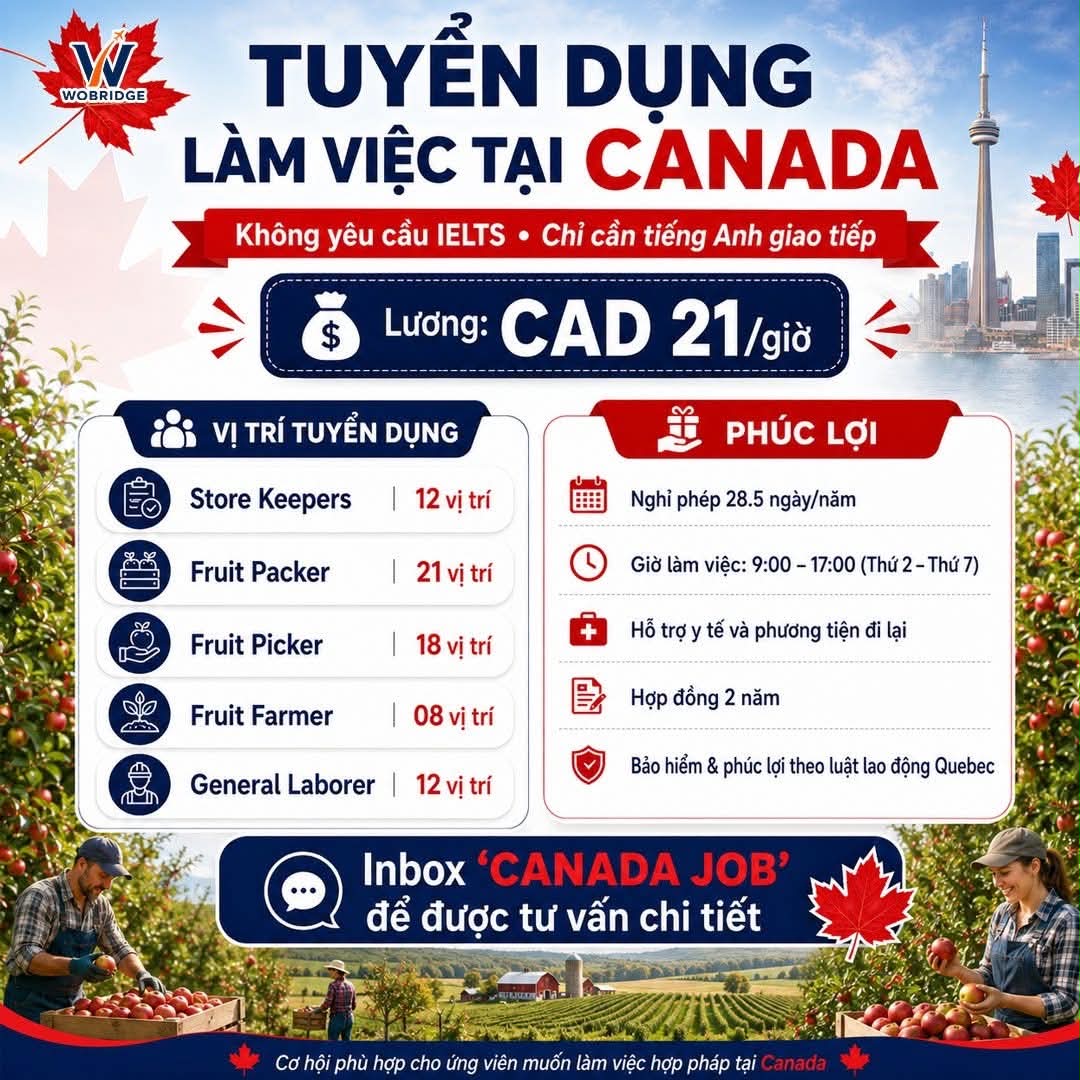
Work in Canada: farm and warehouse jobs
Openings for Store Keepers, Fruit Packers, Fruit Pickers, Fruit Farmers and General Laborers in Canada. No IELTS required, conversational English is enough. CAD 21 per hour, two-year contract.
Read article
How skilled migration routes assess your professional background
Skilled migration is not one system but many. Here is what pathways commonly look at — qualifications, experience, occupation and language — and why the same profile can look different from one programme to the next.
Read article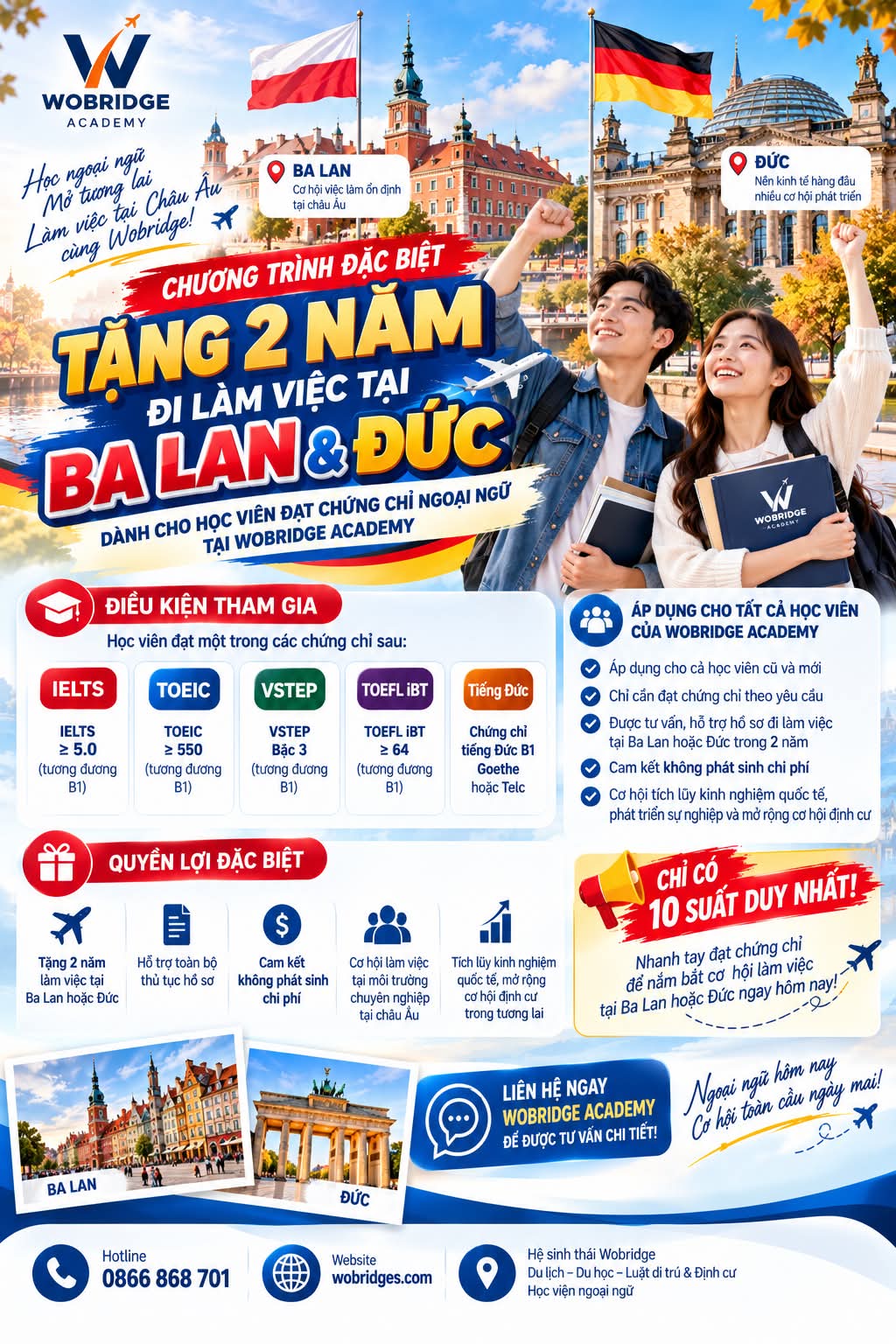
Two years of work in Poland & Germany for students who earn a language certificate
A special Wobridge Academy programme: students with IELTS 5.0, TOEIC 550, VSTEP Level 3, TOEFL iBT 64 or German B1 get application support to work for two years in Poland or Germany, with no extra costs. Only 10 places.
Read article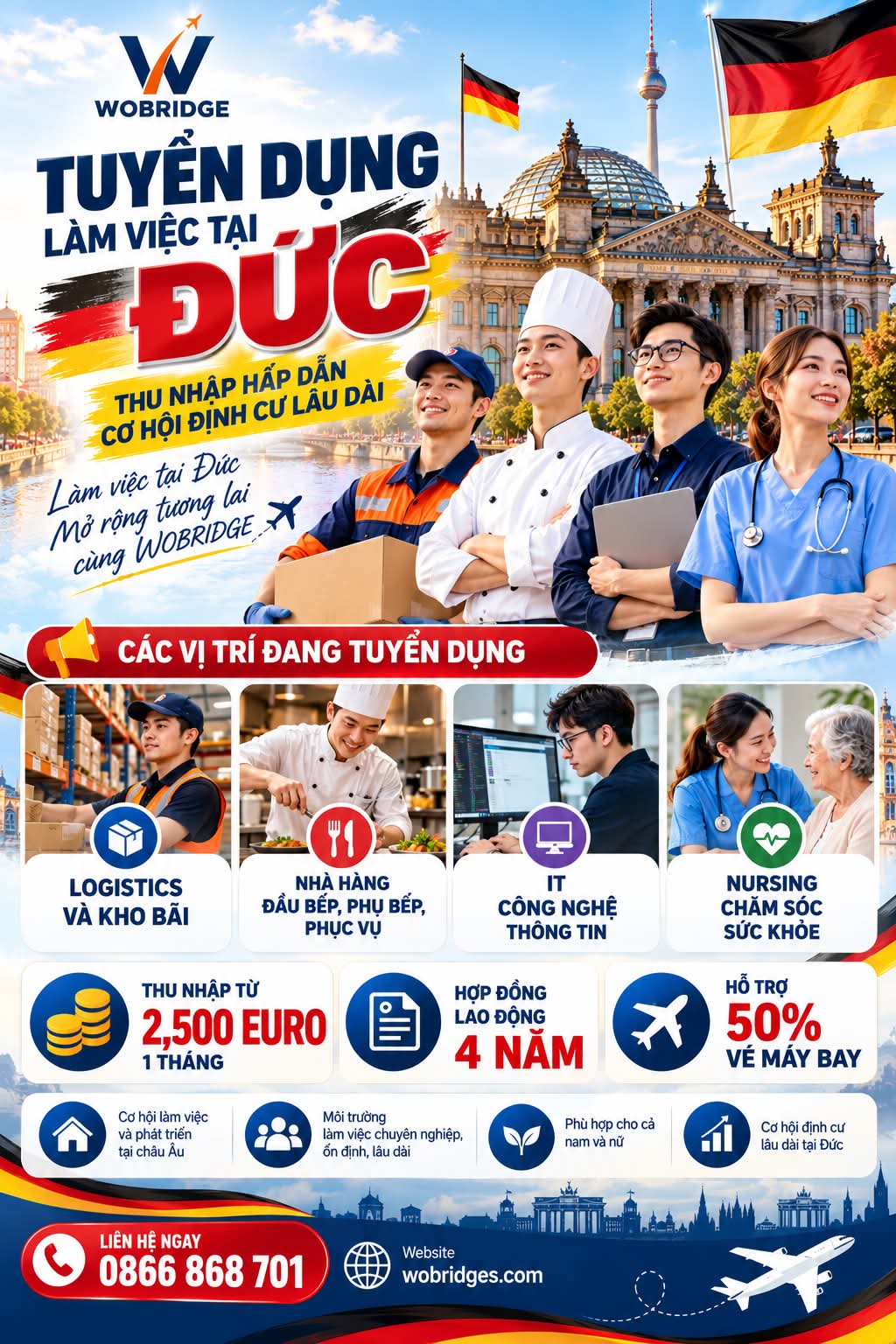
Work in Germany – an attractive income and a chance to settle long-term
Now recruiting: logistics and warehousing; restaurants (chefs, kitchen assistants, waiting staff); IT; nursing and healthcare. Income from EUR 2,500 per month, a four-year employment contract and 50% of the flight paid.
Read article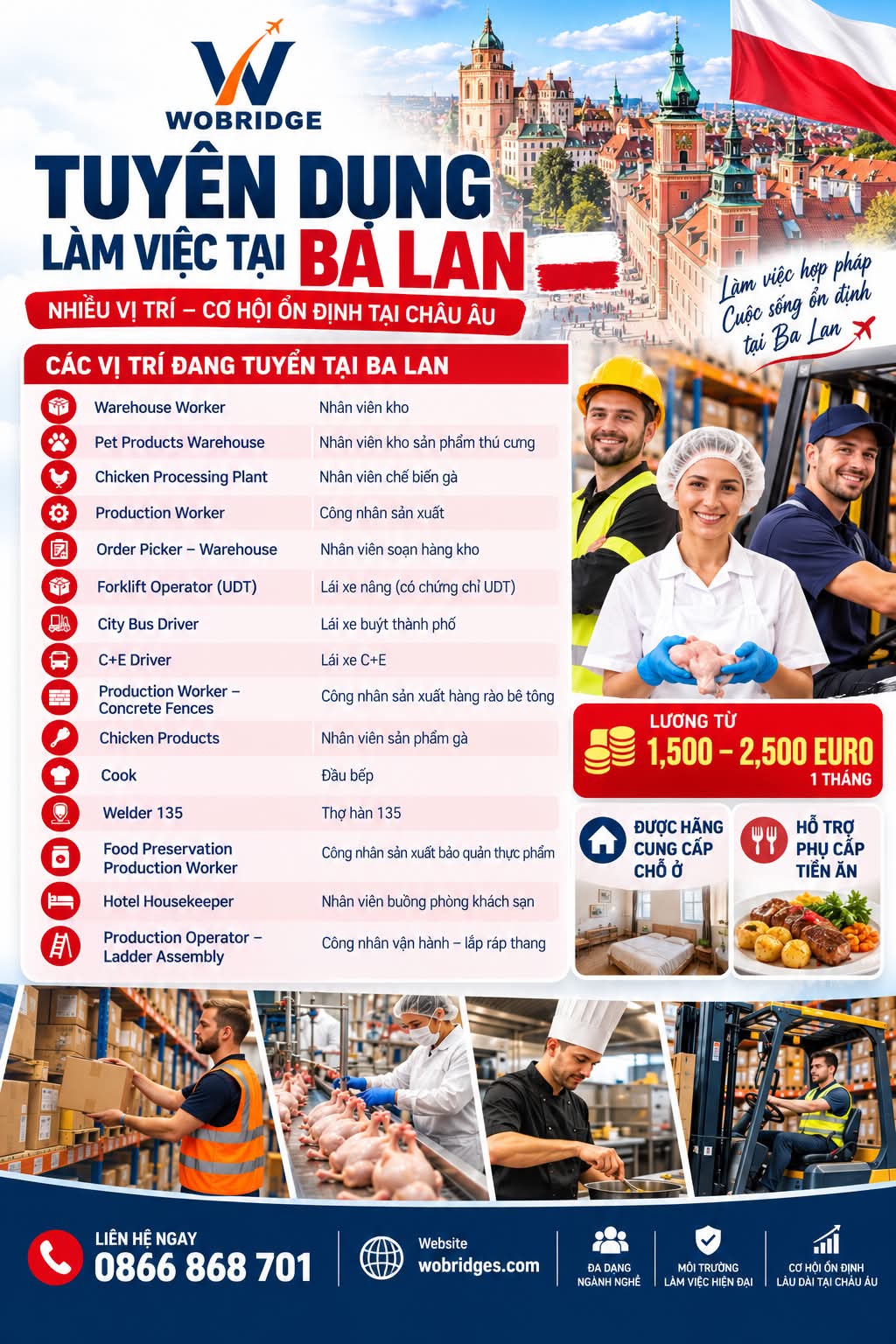
Work in Poland – many positions, a stable opportunity in Europe
15 positions open in Poland: warehousing, production, chicken processing, forklift, city bus and C+E drivers, welders, cooks and hotel housekeepers. Pay from EUR 1,500 – 2,500 per month, accommodation provided and a meal allowance.
Read article
Work in Romania: pay from EUR 1,200 a month
Openings in Romania for electricians, welders, masons, taxi drivers, heavy truck drivers, warehouse workers, general laborers, cooks and kitchen helpers. Pay from EUR 1,200 a month, two-year contract.
Read article
Talk it through
Start with a clear view of your profile
Tell us about your career, your qualifications and what you are hoping for. We will help you see what your record already shows, what needs preparing and which questions to take to the official sources next.